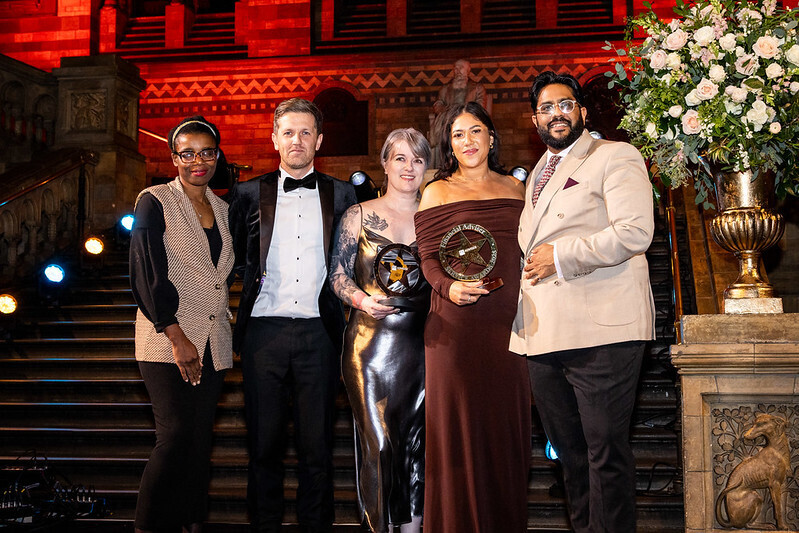
Fresh off the back of a brilliant night at the FT Adviser Service Awards – where we picked up a handful of wins, including an incredible 5 Stars in the Technology & Software Provider category – Secclers across the business have plenty to celebrate. Not least the Ops team. They’re the people who design and manage our highly automated operational processes - keeping money moving, transfers flowing and client data accurate, even as activity across the platform continues to grow.
In an industry that often scales simply by adding more people, we take a different approach – combining automation, collaboration and continual improvement to deliver at pace without compromising on control. We asked Shane Cashin, who leads our operations team, to share how we do it…
Reliable by design
In our world, the quality of the foundations is what matters. Our core processes – paying money in, paying money out, and moving assets – need to run smoothly, every day. We focus on reliability first and then build on that to add speed and scale. And once something is working, we continue to refine it. Very few processes look identical six months later, because we believe in continuous improvement.
Our forecasting tool plays a big part in how we stay ahead. Firstly, it shows how volumes are growing and what that means for team capacity. Secondly, it highlights where a process might need a bit of tightening up as volumes rise. That means we can make improvements early and proactively, rather than reacting to issues later. And thirdly, we use these insights to help shape our roadmap.
Automation, as you’d expect at Seccl, plays a big part too. Wherever a step sits within our control we automate it. We automate the predictable, repetitive parts of a process so our analysts can focus on the cases that need human judgment. For example, our payment allocation tooling reads payment references and source data to work out where money should go (all within seconds), and our transfer tooling turns industry codes into clear updates firms can understand without chasing.
And we hire analysts, not administrators. Their job is to strengthen processes, challenge assumptions, and handle genuine exceptions – not rekey data or push buttons. The more we automate, the more space our analysts have to focus on improvement and insight.
How we’re set up to scale
We structure Ops around three key areas: Payments, Transfers and Asset Servicing. It keeps ownership straightforward and helps us make good decisions about prioritisation.
Our pod structure is central to how we work. Each pod brings together Operations, Product and Engineering with equal voice. That equality is important – it means we all help shape what gets built. Pods plan quarterly and deliver continuously, working across a single platform and code base so improvements land for every client at once, whether that’s a regulatory change, a performance uplift or extra functionality.
We keep the team deliberately small and nimble. Being close to decision-makers helps us move quickly, while still making sure anything that affects customers or controls gets the right level of challenge. If something goes wrong, we fix it, we talk openly about what happened, and we update the process, so it doesn’t happen again.
Ownership is important too. If you shape a process, you’re responsible for its outcomes. It encourages care without slowing us down. We plan quarterly, work in short cycles and involve our risk and compliance teams early so control is built in from the start.
Keeping customers close
Another thing that sets our Ops team apart is how closely we work with our firms. There’s no separate ‘back office’ – we speak directly with customers, whether through our user groups or regular weekly conversations with firms.
We hear pain points first-hand, and we’re accountable where we might not have got something quite right. When something feels clunky or too slow, we feel it. And because we’re plugged into pods, we can act on it quickly. Many firms know our analysts by name, which says a lot about how we work.
Results that show it works
Over the past year, we’ve handled around 12x the transfer volume, while the Ops team has only grown by around 2x.
That shows why our approach works: automation and continuous improvement scale far better than simply adding more people to the same process.
Why it matters
Ultimately, this all comes back to service. We automate where it improves the customer experience. Automated flows are consistent, trackable and transparent, and they free our analysts to focus on the work that really needs them.
It helps us keep the foundations strong: apply money in when we say we will; pay money out when we say we will; move assets clearly and reliably.
And then we keep improving.
The Seccl Ops vibe
People often ask what it’s like to work in this team. For me, it’s genuinely the brightest group of people I’ve worked with in my financial services career. They’re thoughtful, curious and focused on doing things the right way, not just the familiar way.
If I had to describe the Ops vibe in three words, I’d say we’re energetic, expert and driven.