
Anthropic’s recent launch of Claude for Financial Services has inevitably prompted another round of questions about what AI could mean for financial advice – including, at the more existential end, what clients will still value from a human adviser as more of the work around them becomes easier to automate.
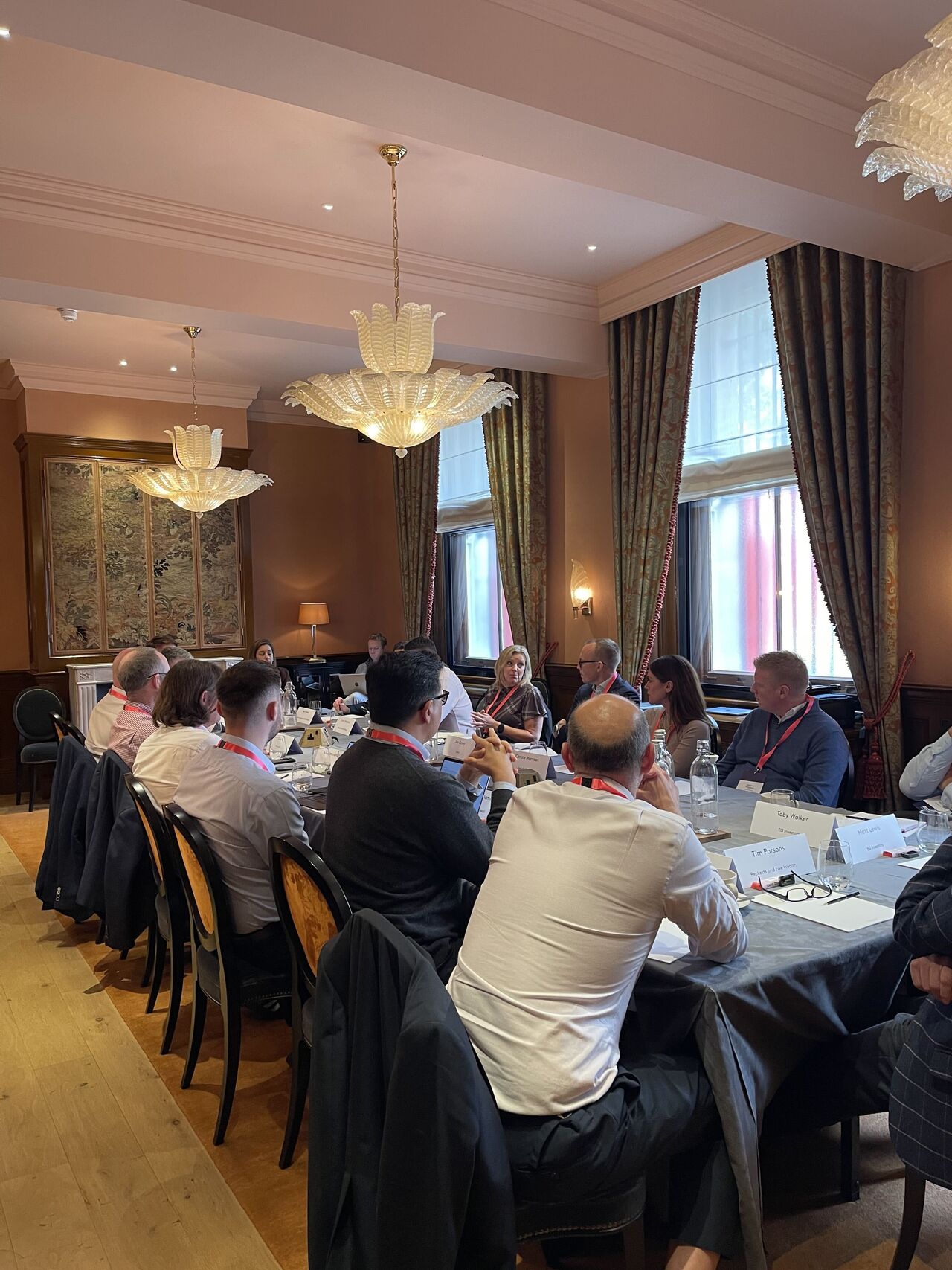
That question came up at a recent roundtable we hosted with advice firms including Foster Denovo, Walker Crips, Finli and Investment Quorum, alongside contributions from Woven co-founder Nicky Sevel and Ben Hammond from consultancy AheadMG.
The discussion quickly exposed a more immediate problem, though. Technology is moving faster than ever, making choices harder – and potentially more costly to get wrong.
So how do you take advantage of what’s possible now, without making technology decisions you’ll regret in a few years?
Move quickly, without getting stuck
After all, nobody knows which of the fresh crop of AI tools will still be around in a few years, which will be acquired or how much of their functionality will simply find its way into the CRMs and back-office systems firms already use. It’s a gold rush that makes picking a winner frankly impossible.
But sitting out of the market while you wait to see how everything pans out isn’t an option either – not when firms are already seeing meaningful time savings across the advice journey.
The answer, then, may be less about picking the right provider and more about preserving the ability to change your mind. One participant described being “fixated” on keeping their architecture as composable as possible: using individual tools for the things they do well, without allowing them to spread into other parts of the stack simply because the functionality happens to be available.
Their test for technology decisions was simple: “Does this drive me closer to vendor lock-in, or does this allow me to have more freedom?”
And the ability to change isn’t purely an architectural question.
“What’s the hardest thing about implementing new technology?” one attendee asked rhetorically. “The soft bits. The people.”
Training, adoption and support can easily outlast the technology cycle itself – while the most adaptable technology stack won’t help much if the organisation around it isn’t set up to change with it.
As such, firms need people who can bring new tech into the business, get others comfortable using it and then be prepared to change again when something better comes along.
Your data needs to be able to move too
The same applies to the information underneath the technology. As I recently explored, acquisitions make the problem particularly visible. Bring another advice firm into a group and you may inherit another CRM, another set of processes and years of historic data structured and maintained in entirely different ways.
Around the table, firms talked about reconciling records across different platforms and back-office systems, competing sources of truth and the difficulty of validating information accumulated over many years.
Rapid advances in AI make control over that data even more important. If new tools are going to interrogate years of client information, identify patterns and automate more of the work around advice, firms need to be able to access that information independently of whichever system happens to hold it.
And access alone isn’t enough. The discussion repeatedly came back to context: knowing what the data represents, where it came from and whether it can be trusted.
That’s also the argument at the heart of our Whose data is it anyway? report. Control means being able to define what your data means, move it when you need to and use it confidently across different systems.
What does the client get from all this?
But there’s a real risk that conversations about better architecture, cleaner data and AI become almost entirely about making advice firms more efficient.
One firm around the table was candid about exactly that risk. Much of its recent technology work, it explained, had focused on improving the operating model – moving information between systems, saving advisers time and connecting different tools – while comparatively little had changed for the client.
It revealed the obvious but powerful truth in all this – at the end of the day, this has to be tied directly to client outcomes. As they put it: “What’s the point of a great system with no clients to look after?”
For years, one participant added, advice firms have largely dictated how clients interact with them: when reviews happen, how changes are made and when clients can take action. But technology actually gives firms an opportunity to open that up.
Take Investment Quorum, a Seccl client, for example. It built its own client-facing experience that brings together information that would traditionally have appeared in a periodic review pack – and lets clients correct or update details themselves as things change. Advisers still provide regular reviews and ongoing advice, but the client doesn’t have to wait for the next scheduled meeting to engage with their own financial information.
“We’ve dictated how we communicate with clients”, one participant summarised. “We’ve never actually allowed them to select how they want to communicate with us.”
And perhaps that should be the real test of whether all this technology investment is actually working.
Providers will come and go, products will converge and capabilities that feel novel today will quickly become standard. But if those capabilities only serve to make the machinery behind advice work better, haven’t we missed the mark?
As more of the advice process becomes automated, I’d argue that the client experience becomes the real differentiator. The opportunity, then, is to use technology to rethink what ‘human’ advice should feel like in our increasingly digital world.
After all, Claude can do many things. But being human isn’t one of them.