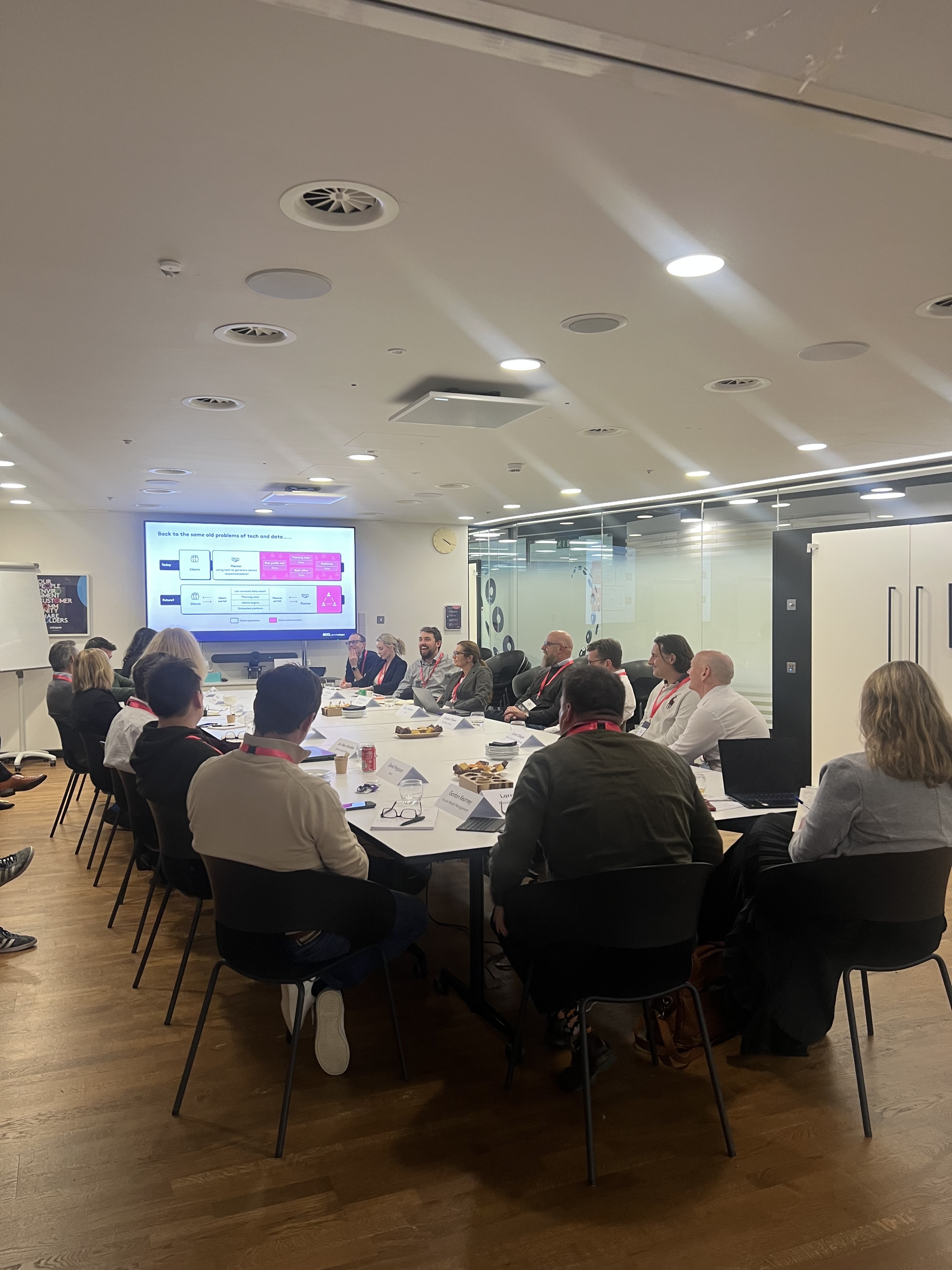
Last week, Seccl and Plannr brought together advice firms, consultants and technology leaders for a roundtable on future-proofing your tech stack.
This wasn’t a theoretical debate about ‘digital transformation’. It was a practical, open conversation about where time is really being lost, where pressure is building, and where technology can unlock genuine opportunity.
With perspectives from Heather Hopkins (NextWealth), Joe Harris (Alpha FMC), Nick Harper (Plannr) and Nick Raine (Söderberg & Partners) – alongside firms including Absolute Financial Group, Edison Consulting, Hybrid Advice and Walker Crips Financial Planning – the discussion was firmly grounded in the day-to-day reality of running an advice business.
In prepping for the session, a quote from Canadian Prime Minister Mark Carney hit home: “Nostalgia is not a strategy.”
Systems that once served advice firms well are now struggling to keep pace with rising expectations - from clients, regulators and firms themselves. Standing still is no longer an option; it’s a risk.
The session was focused on the issues firms are facing right now: market dynamics, capacity and cost; confronting the limits of existing tech stacks and exploring what a more joined-up future could look like.
Market trends and tech adoption
Heather Hopkins set the scene with a sharp, data-led view of the pressures shaping advice firms today.
Capacity, cost-to-serve and growth remain tightly linked, while hiring more people is becoming harder to sustain. Adviser time is stretched, and margins are under pressure – making technology an increasingly important lever for scale.
Heather highlighted where time really goes. One third of adviser time is spent with clients; the rest is absorbed by administration and process. Unsurprisingly, 72% of advisers want to reduce their admin burden – not to do less advice, but to spend more time delivering it.
That pressure is driving a shift towards more efficient, digital-first journeys. Firms are moving away from periodic reviews towards advice that is more proactive and ‘always on’. Data sits at the heart of this shift, yet fragmented systems continue to undermine both efficiency and the client experience – particularly for larger, more complex firms.
Why progress has been slower than expected
Alpha FMC’s Joe Harris then explored why progress in adviser technology has often lagged expectations.
His view was clear. Tech stacks have grown tool by tool, each solving a specific problem but rarely designed to work as a whole. The hidden cost shows up in wasted time, degraded data quality and journeys that still rely heavily on manual effort.
Joe challenged firms to think differently about ownership of the client journey, and to look beyond surface-level functionality when assessing technology. Legacy systems, not designed to be open or future-ready, remain a major constraint – and the choices firms make now will shape how well they can scale later.
The takeaway was simple: integration isn’t a technical nice-to-have. It’s a strategic decision.
What joined-up technology looks like in practice
The final session moved from theory to practice. Nick Harper of Plannr and Nick Raine from Söderberg & Partners demonstrated how the Plannr–Seccl integration is already changing adviser workflows.
Fewer logins. Less rekeying. Advisers working from a single interface while custody and transactions happen quietly in the background. For firms, that creates real opportunities to remove cost and scale with confidence. For clients, it unlocks cleaner, more intuitive digital experiences that meet modern expectations.
The open discussion that followed was candid, practical and energised.
Capacity pinch points, cost-to-serve, data visibility and client experience surfaced repeatedly, alongside questions about who really owns the end-to-end client journey.
AI featured heavily too – with a clear consensus that its real value lies in enabling people to do better work, not replacing judgement. Used well, it can remove low-value tasks and surface insight at the right moment, rather than adding another layer of complexity.
What’s next
If this has sparked ideas, there’s much more to come.
We’ll soon be publishing a white paper that aims to go deeper on this (huge) topic – exploring what future-proofing your tech stack really means in practice, and how advice firms can move forward with confidence.
If this session is anything to go by, this isn’t about fixing what’s broken. It’s about building something better.
We’ll be setting out the path to getting there.